MEDTECH · ALERTNESS & SAFETY
Measuring alertness, objectively.
Where the law requires it,
we make its application possible.
Regulations require alertness to be assessed for many drivers and professionals.
Today’s tools — cumbersome and scarce — cannot meet that need.
K-WA is developing an objective, active and accessible fitness test to close this gap.
Current alertness assessment
has reached its limits.
The reference test relies on a heavy, costly protocol that is poorly suited to today’s regulatory,
insurance and prevention challenges.
A new generation of
alertness test —
immersive and standardised.
K-WA designs an active test inspired by the Osler paradigm,
set within an immersive experience that standardises the testing environment.
An approach built from the ground up to meet European
and French regulatory requirements related to driving.
Two worlds, one shared need:
to measure alertness objectively.
K-WA is aimed at organisations with a duty or responsibility to assess alertness, and at the sleep-medicine community. Our solution sits upstream, as a fitness test — not as a real-time monitoring tool.
K-WA
= KOsler +
= KWA-TME
K-WA builds on the OSLER paradigm, a reference active alertness test, and enriches it with physiological signatures and automated analysis. We are not reinventing a proven test — we are finally making it accessible.
- The OSLER paradigm — an active test recognised in UK regulations for fitness to drive — whose original commercial tool is no longer available.
- A recording of behavioural and physiological signatures consistent with transient attention lapses, currently undergoing clinical qualification.
- An AI-assisted analysis producing a structured report, performed by a healthcare professional.
- A structured clinical validation process — the foundation of regulatory and medical credibility.
Sleepiness and alertness disorders:
a major human and economic cost.
Sleep and alertness disorders affect tens of millions of people across Europe,
with direct consequences for road and workplace safety.
~250 M
people affected by sleepiness in Europe
~10 M
people affected by OSAHS in France (approx. 15%)
~12 M
psychotropic-medication users who should verify their fitness to drive
~1,2 pt
of GDP in estimated annual cost in France related to the issue
Sources: Santé Publique France, OFDT, HAS. Figures provided as indicative orders of magnitude.
What guides our work.
Scientific rigour first
No claim without validation. The credibility of a health solution is built on clinical evidence and transparency about its limits.
Innovation rooted in France
An approach aligned with public policies on technological sovereignty and e-health prevention.
03 — Accessibility
Measuring alertness, at scale
Making alertness assessment simpler, more reproducible and more widely accessible, in the service of everyone’s safety.
A multidisciplinary team at the crossroads of sleep, medicine and technology.
Sleep physicians, engineers, quality &
regulatory experts and neuroscientists united around a single goal.
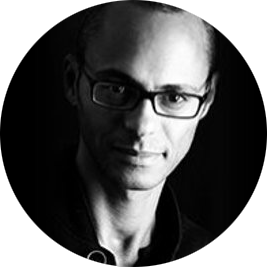
The backing of recognised
sleep and alertness experts.
K-WA has assembled a scientific board of specialists to ensure the rigour of its clinical and regulatory approach.
More specialists…
Neuroscience, pulmonology and digital health innovation
— currently being assembled –
Working on alertness, safety or prevention ?
Let’s talk.
Safety-critical sectors, sleep centres, institutional and scientific partners: we welcome the conversation.